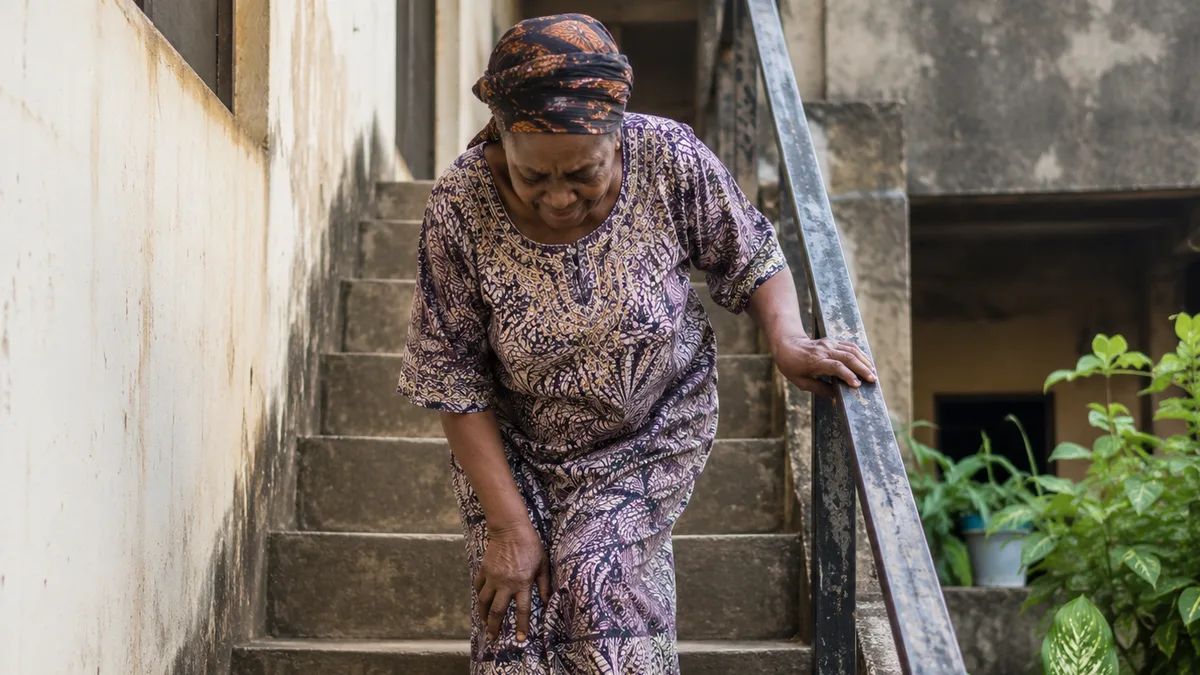
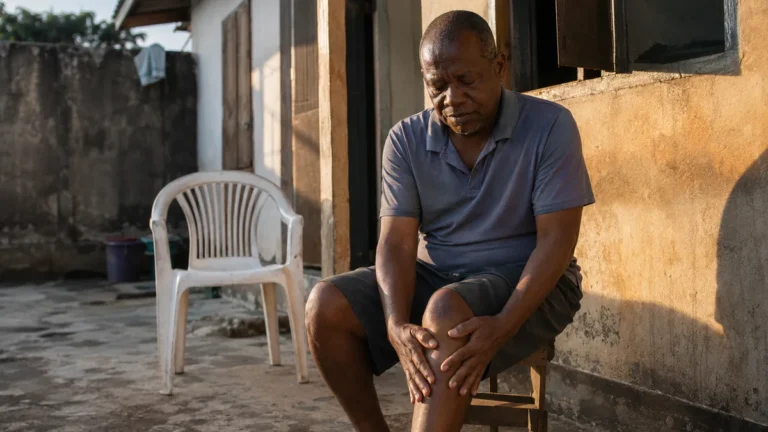
Knee pain when walking usually comes from cartilage wear, from the muscles around the knee being weak or tight, or from an old injury that never fully settled. Where exactly it hurts, and at which moment in the step, points to the likely cause.
A knee that locks, gives way, or is hot and swollen needs a doctor. Ordinary aching often improves with stronger thigh muscles, less load and regular gentle movement.
Walking is meant to be the easy one. When the knee starts complaining on flat ground, on stairs, or after a few hundred metres, it changes how far you are willing to go, and most people quietly start avoiding distance.
The useful thing about knee pain is that it gives you clues. The exact spot and the exact moment it appears narrow things down considerably.
Where it hurts tells you something
| Location | Often linked to |
|---|---|
| Front, around or under the kneecap | How the kneecap tracks as you bend, commonly with weak thigh muscles |
| Inner side | The most common area for cartilage wear |
| Outer side | Tightness in the band running down the outside of the thigh |
| Behind the knee | Tight hamstrings, or swelling collecting at the back |
| All around, with swelling | Inflammation that should be examined |
And when it hurts tells you more
Going down stairs hurting more than going up points to the front of the knee and the kneecap. Pain in the first steps after sitting, which then eases, is typical of stiffness rather than damage. Pain that builds the longer you walk suggests load and wear. Pain at night, unrelated to movement, is the one that deserves attention soonest.
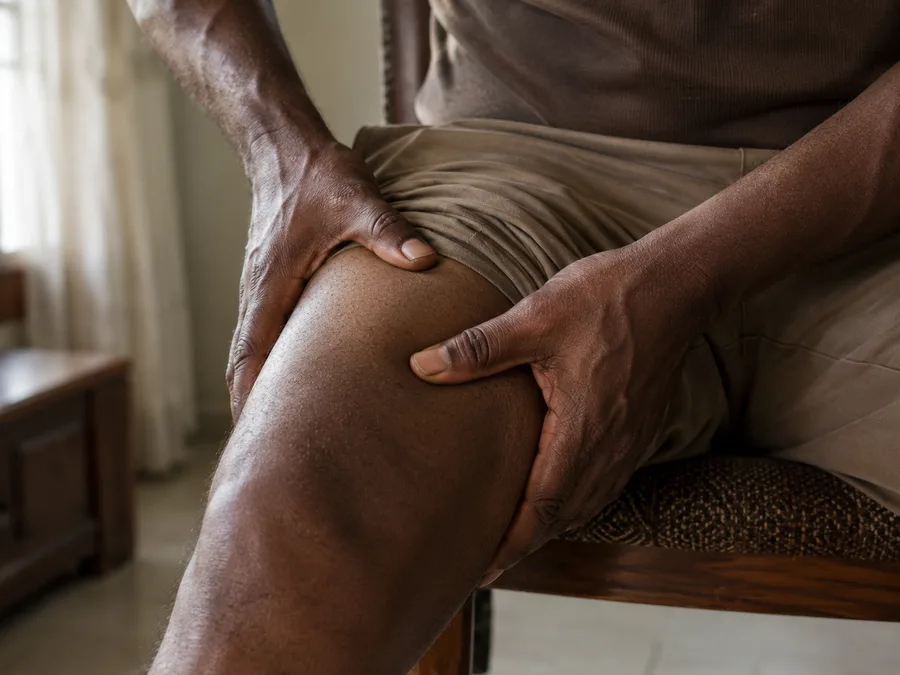
Why the thigh muscle matters so much
The muscle on the front of the thigh acts as the knee’s shock absorber. When it is strong, it takes a good share of the impact from every step. When it is weak, more of that force goes through the joint itself.
This is why knee pain often gets worse during periods of inactivity. Pain leads to less walking, less walking weakens the thigh, and the weaker thigh gives the knee less protection. Breaking that loop matters more than any product.
What helps
- Strengthen the thigh without bending the knee much. Sit on a chair, straighten one leg out in front, hold for five seconds, lower slowly. Ten to fifteen times per leg, twice a day. It looks too easy to work. It works.
- Keep walking, but change how. Shorter, more frequent walks on flat ground beat one long walk on rough terrain.
- Deal with the stairs differently. Going down, lead with the painful leg and take the step slowly. Use the handrail without embarrassment.
- Check your footwear. Worn-down soles change how force travels up the leg. Shoes with some cushioning under the heel take load off the knee.
- Warmth and massage for stiffness. Work the thigh and calf muscles, not just the joint itself. Much of what feels like knee pain is the muscle above and below pulling on it.
- Reduce the load you carry. Every extra kilo you carry is felt several times over at the knee with each step.
The knee locks and will not straighten. It gives way under you. It is hot, red and swollen. You cannot put weight on it. The pain started after a fall or a twist. There is swelling that appeared within an hour of an injury.
These point to something structural. Massage and topical products are not the answer for them.
Common questions
Why does my knee hurt when I walk but not when I rest?
Walking loads the joint. If the cartilage is worn or the surrounding muscles are weak, the joint absorbs more force than it comfortably can, and you feel it during the movement rather than at rest.
Why is going down stairs worse than going up?
Descending puts more force through the front of the knee, and the thigh muscle has to control the movement while lengthening. That combination is harder on the joint than climbing.
Should I stop walking if my knee hurts?
Usually not. Stopping weakens the muscles that protect the knee. Reduce distance and choose flat ground, but keep moving unless the joint is swollen or a doctor told you otherwise.
What can I rub on a painful knee?
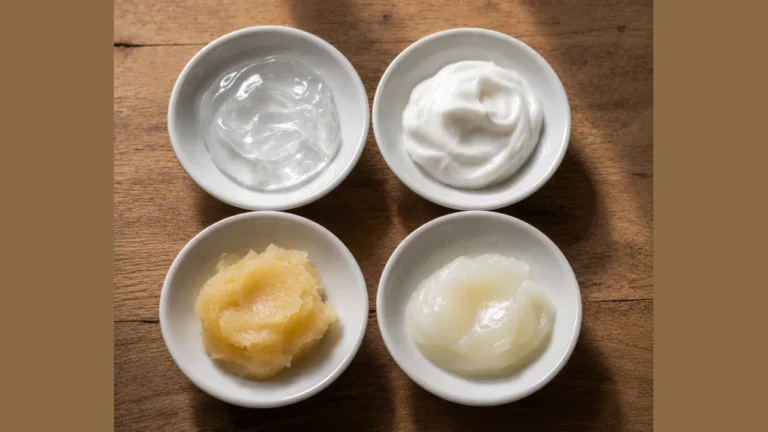
A massage cream, gel or balm on the knee and the thigh muscle above it. The massage matters as much as the product, so spend a few minutes rather than just applying it.
Does knee pain mean I need surgery?
For most everyday knee pain, no. Strengthening, load management and time resolve a great deal of it. Surgery is a decision only a doctor can make after examining the joint.
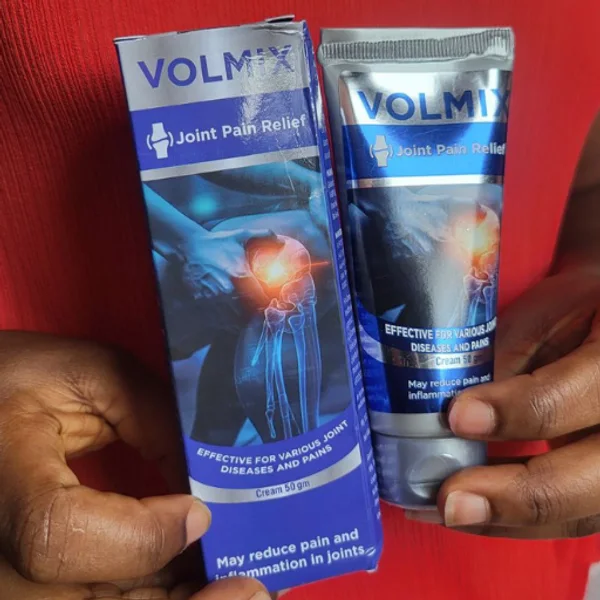
Volmix Cream
A plant-based massage cream for the knees, thighs, waist and shoulders. Apply to the skin and massage in. It is a topical product for comfort, not a medicine, and it does not treat or cure any condition.
₦98,000 ₦49,000 · pay on delivery
See the product page
Delivery is free from 3 units. You check the parcel before paying the courier.
Read next
This article is general information, not medical advice. It does not diagnose or treat any condition. Speak to a doctor or pharmacist about persistent or worsening pain, and before starting anything new if you are pregnant, breastfeeding or under treatment.