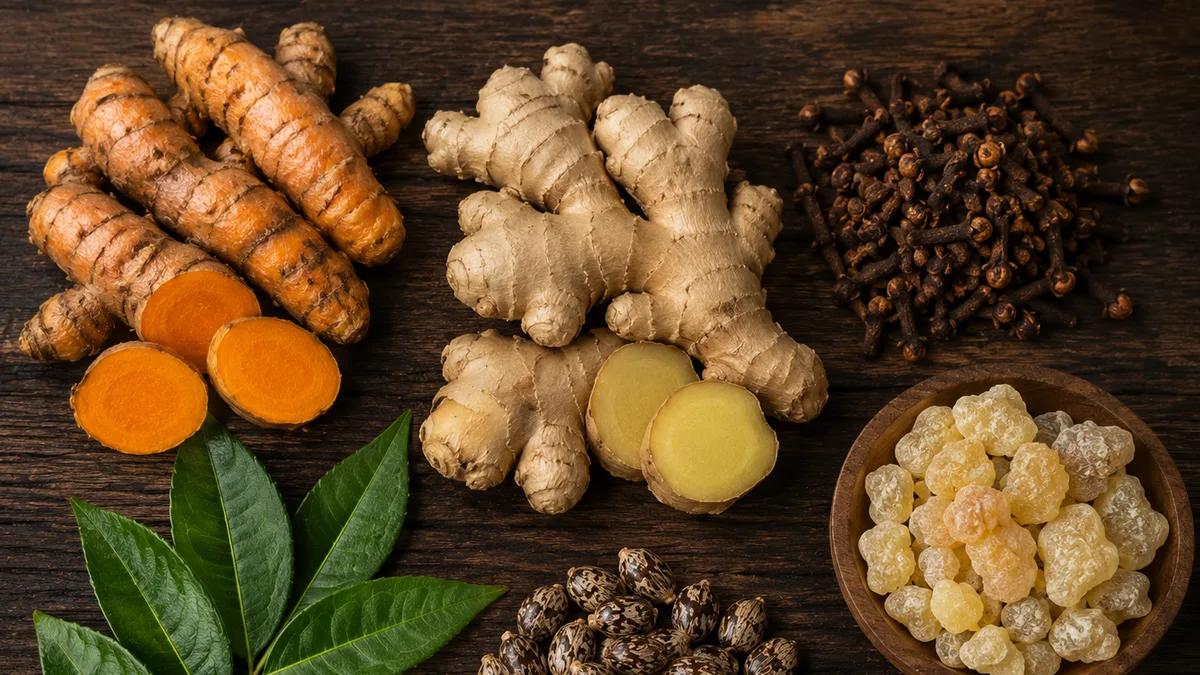
The plants that appear most often in herbal joint creams are wintergreen, clove, camphor, menthol, turmeric, ginger, capsaicin, boswellia and castor oil. Most were used in traditional massage preparations long before they appeared in tubes.
Traditional use is not the same as proven treatment. These are cosmetic massage products. A herbal label does not mean a product is automatically safe, and it does not mean it treats any disease.
Turn over any joint cream in a Nigerian pharmacy and you find a similar cast of plants, sometimes under Latin names, sometimes under Ayurvedic ones, occasionally both. Knowing what they are makes it easier to compare products and to spot the ones telling you nothing.
What each one is
| Ingredient | Also called | Traditionally used for | What you notice |
|---|---|---|---|
| Wintergreen oil | Gandhpura, Gaultheria | Topical massage on joints and muscles | Distinctive medicinal smell, warmth |
| Clove oil | Laung, Syzygium aromaticum | Local application, dental and muscular | Strong aroma, mild tingling |
| Menthol | From mint | Cooling rubs | Immediate cool sensation |
| Camphor | Karpoora | Chest and muscle rubs | Cool then warm, sharp smell |
| Turmeric | Haldi, Curcuma longa | Both culinary and topical paste use | Yellow colour, earthy smell |
| Ginger | Zingiber | Warming preparations | Gentle warmth |
| Capsaicin | From chilli pepper | Warming rubs | Strong heat, can sting on sensitive skin |
| Boswellia | Shallaki, frankincense resin | Ayurvedic joint preparations | Little sensation of its own |
| Castor oil | Eranda, Ricinus communis | Carrier oil for massage | Thick, helps the product spread |
| Nirgundi | Vitex negundo | Traditional topical preparations | Little sensation of its own |
Reading the label properly
Three things separate a label worth trusting from one that is decorative.
Quantities, not just names. A label saying “contains turmeric” tells you almost nothing. One saying how many milligrams per gram tells you the manufacturer measured what went in. Most ingredients sit near the bottom of the list in small amounts, which is normal, but you deserve to know.
The carrier, not only the actives. Whatever is doing the spreading, usually an oil or a cream base, makes up most of the tube. It determines how the product feels and how well you can massage with it.
Preservatives. Any water-containing product needs them, or it grows bacteria. Sodium benzoate and phenoxyethanol are common and normal. A “100% natural” cream with water and no preservative is either not accurate or not safe.
Plant extracts cause allergic reactions too. Wintergreen contains a compound related to aspirin and should be avoided by anyone allergic to it, by children, and during pregnancy unless a doctor approves. Capsaicin can burn sensitive skin. Clove oil irritates some people.
Patch test any new product: a small amount on the inner forearm, wait 24 hours, check for redness or itching before using it on a larger area.
What these products can and cannot do
Topical herbal products are cosmetic massage products. They act at the skin and the tissue just below it. What most users notice is the sensation, warm or cool, along with the effect of the massage itself.
They do not treat arthritis. They do not repair cartilage. They do not replace anything a doctor prescribed. Any product claiming to cure a joint disease is making a claim it cannot support, and that claim is a reason to be more careful with the product, not less.
Used sensibly, as part of a routine that also includes movement, rest and proper diagnosis when something is wrong, they are a reasonable thing to have in the house.
Common questions
Which herbal ingredient works best for joint pain?
No single ingredient is established as best. Most herbal creams combine several, and much of what people notice comes from the sensation and the massage. Choose based on how a product feels on your skin and whether the label is honest about what is inside.
Is turmeric cream as good as eating turmeric?
They are different things entirely. Applied to the skin and eaten, turmeric behaves differently in the body. Neither is a treatment for a diagnosed joint condition.
Are herbal creams safe during pregnancy?
Ask a doctor first. Several common ingredients, wintergreen among them, are usually avoided during pregnancy. Herbal origin does not make a product automatically safe.
Can children use these products?
Most are labelled for adults. Wintergreen in particular is not recommended for children. Check the label and ask a pharmacist before using anything on a child.
Why does my cream smell so strong?
Wintergreen, clove and camphor all have powerful aromas. The smell usually fades within a few minutes of massaging it in.
Volmix Cream
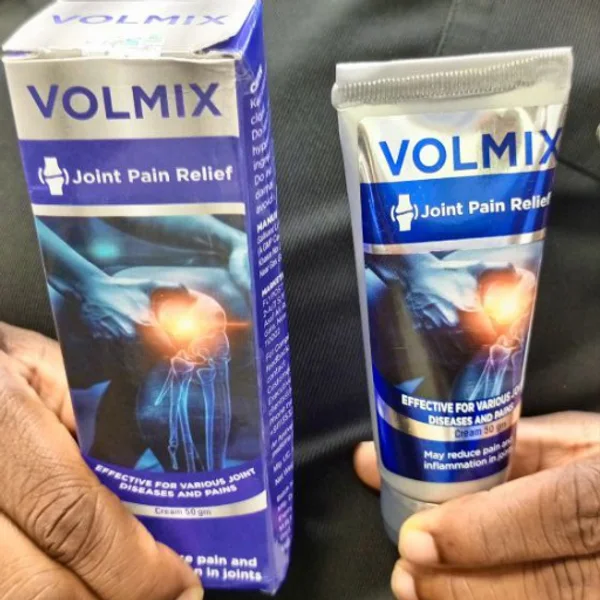
The 50 g tube declares, per 10 g: gandhpura oil 500 mg, eranda 100 mg, nirgundi 30 mg, shallaki 20 mg, haldi 20 mg and laung oil 5 mg, in a cream base. Made by Gallivant Life Sciences, a GMP certified facility. It is a topical product for comfort, not a medicine, and it does not treat or cure any condition.
₦98,000 ₦49,000 · pay on delivery
See the product page
Delivery is free from 3 units. You check the parcel before paying the courier.
Read next


This article is general information, not medical advice. It does not diagnose or treat any condition. Speak to a doctor or pharmacist about persistent or worsening pain, and before starting anything new if you are pregnant, breastfeeding or under treatment.