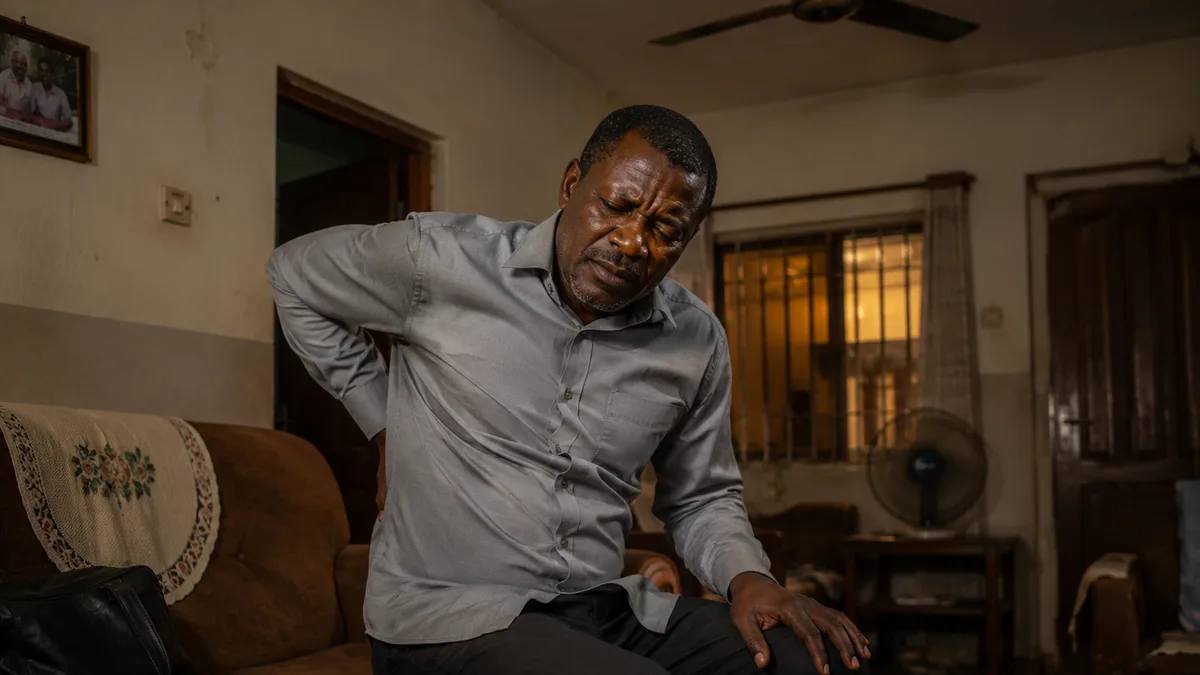
Back pain after work comes from holding one position too long or repeating one movement too often. Sitting, standing, driving, lifting and bending all load the back in their own way, and the ache usually shows up hours after the work is done.
What helps is changing position during the day, moving and stretching in the evening, warmth and massage. Pain that spreads down the leg or comes with numbness needs a doctor.
You feel fine while you work. You get home, sit down, and twenty minutes later your back will not let you stand up straight. That gap between the cause and the pain is what makes this so hard to fix: by evening, nobody connects the ache to how they sat at nine in the morning.
What your job is doing to your back
Different work loads the back differently. Finding your pattern below usually explains the timing of your pain.
| If your work is | What strains the back | What tends to help most |
|---|---|---|
| Sitting at a desk or counter | Hips tighten, lower back holds the posture alone | Standing every 40 minutes, supporting the lower back |
| Standing behind a stall or counter | Muscle stays contracted for hours without release | Shifting weight, one foot raised on a low step, sitting briefly |
| Driving long routes | Vibration plus a fixed seated position | Stopping to walk, adjusting the seat closer to the wheel |
| Lifting and carrying | Load taken by the back instead of the legs | Squatting to lift, keeping the load close, splitting weight |
| Bending over work | Back held in flexion for long stretches | Raising the work surface, straightening up regularly |
| Farming or manual labour | All of the above in one day | Warm-up before, movement and massage after |
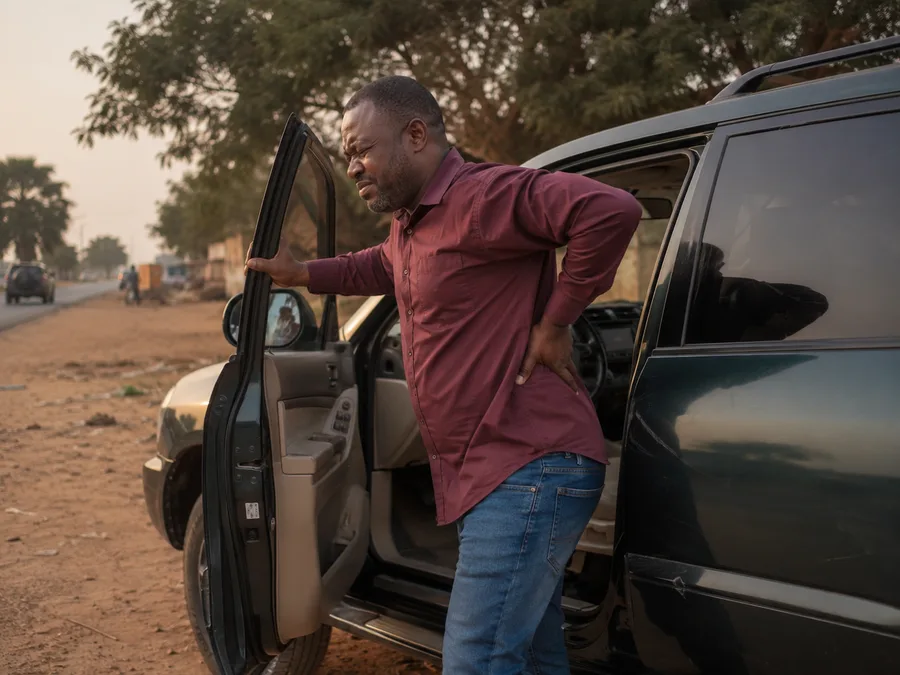
Why it hurts in the evening and not during
While you work you are warm, moving and distracted. The muscle is loaded but active, and pain signals compete with everything else going on.
When you stop, the muscle cools and stiffens in the shortened position it held all day. That is when you feel it. It also explains why the first few minutes after standing up are the worst, and why things loosen slightly once you start moving again.
What to do in the evening
- Do not go straight to the chair. Walk for five or ten minutes first, even around the compound. Sitting immediately after standing all day locks in the stiffness.
- Warmth first, then movement. A warm shower or warm cloth on the lower back, then gentle stretching. Cold muscle does not stretch well.
- Stretch what shortened. If you sat all day, open the hips and the front of the thighs. If you stood or bent, ease the lower back and the back of the legs.
- Massage the sore area. A few minutes of firm circular pressure on the muscle beside the spine. A cream or balm makes this easier and gives you a reason to do it properly.
- Sleep somewhere that supports you. If the pain is always worst on waking, the mattress is part of the problem, not just the job.
Prevention beats the evening routine
The evening routine treats what already happened. These change the load itself.
Break up long positions. Two minutes of standing every forty minutes of sitting does more than an hour of stretching at night. Set an alarm at first, because nobody remembers on their own.
Lift with the legs and keep the load close to the body. A load held away from you multiplies what your back carries.
Alternate sides. Carrying on the same shoulder or hip every day builds the problem into your posture.
See a doctor if the pain runs down one leg past the knee, if there is numbness, tingling or weakness in the leg or foot, if you have fever alongside the pain, if it followed a fall, or if it keeps getting worse over several weeks instead of easing.
Common questions
Why does my back hurt after work but not during?
While working you are warm and moving. When you stop, the muscle cools and stiffens in the position it held all day, and that is when the pain registers.
Is sitting or standing worse for the back?
Neither is worse by itself. What causes trouble is doing either without a break. Sitting tightens the hips; standing keeps the back muscles contracted. Changing position regularly matters more than which one you do.
Should I use a back support belt at work?
A belt can help during heavy lifting, but wearing one all day lets the muscles do less and they weaken over time. Ask a doctor or physiotherapist before making it a daily habit.
How long should back pain from work last?
Ordinary muscular pain usually eases within a few days to two weeks. Pain lasting longer than that, or getting worse, should be examined.
Can I still work with back pain?
Most people can and should keep moving, but avoid the specific movement that sharpens the pain. If the work involves heavy lifting and the pain is significant, get it checked before continuing.
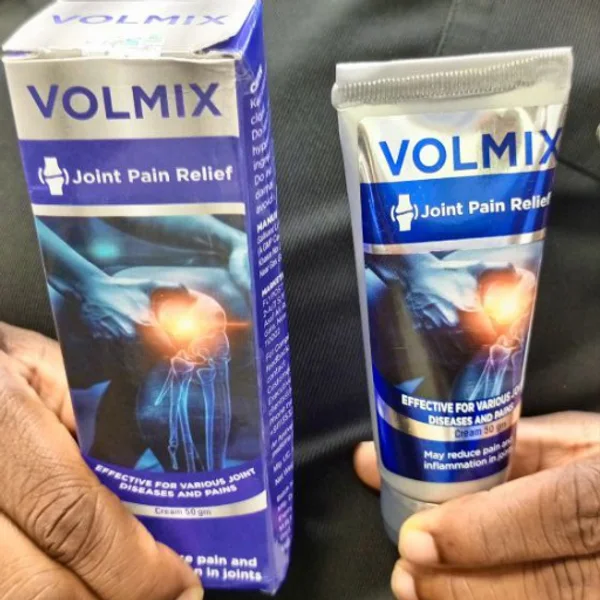
Volmix Cream
A plant-based massage cream for the back, waist, knees and shoulders after a long day. Apply to the skin and massage in. It is a topical product for comfort, not a medicine, and it does not treat or cure any condition.
₦98,000 ₦49,000 · pay on delivery
See the product page
Delivery is free from 3 units. You check the parcel before paying the courier.
Read next

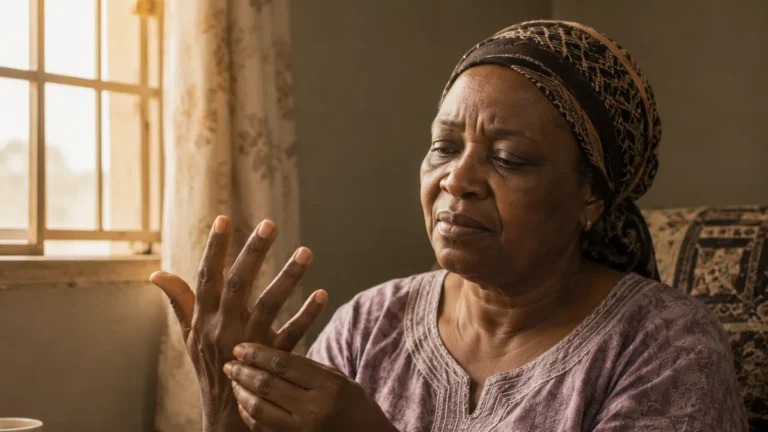


This article is general information, not medical advice. It does not diagnose or treat any condition. Speak to a doctor or pharmacist about persistent or worsening pain, and before starting anything new if you are pregnant, breastfeeding or under treatment.